
Create an account to be able to build Wish Lists.
Brake Rotor Brands:

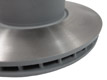 Standard OEM Direct Replacement
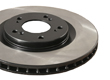 Centric Premium High Carbon Direct Replacement
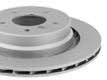 Zimmerman Coated OEM Direct Replacement
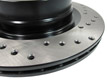 Turner Motorsport cross-drilled performance
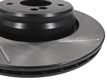 Turner Motorsport slotted performance/racing
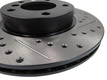 Turner Motorsport cross-drilled and slotted performance
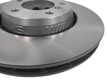 M Sport, M Performance, or Euro (selected BMWs only)
More Info (in very simplified terms...)
It's a common misconception that simply changing brake rotors will improve your stopping performance. This will only prove true under extreme conditions - track events and racing - and only with rotors such as BMW's Euro and Performance parts. For the majority of us, the standard OEM replacement rotors will be more than sufficient for the type of driving that we do.
The brake rotor acts as a heat bank. Heat is stored in the cast iron of the rotor as the brake pads create friction. The central vanes of the rotor direct air through the casting, venting the rotor of the heat and also cooling it at the same time. A larger rotor has more capacity to store heat and can thus, provide better stopping performance for greater lengths of time. This is one reason why racecars typically have big brakes. Too small of a rotor for the application will lead to the heat being trapped with the rotor and overheating the rest of the brake system.
This makes a difference in your rotor choice because a standard brake rotor has more mass and will act as a better heat bank than one that has been drilled and/or slotted. It has become necessary to drill or slot the rotors for other reasons - mainly to allow an exit for gases that build between the pad and the rotor. The gas needs an escape so that it does not block the application of the pad to the rotor. But newer technology has made these types of rotors nearly obsolete (although they look pretty cool on a street car). None of the street pads produce this gas and there are very few race pads that still do. One benefit to slotted or drilled rotors is that the edges of the holes and slots can graze the pad material, which will decrease pad life but help maintain heat in the pad (critical for track pads). Note that the Turner Motorsport rotors have their holes and slots chamfered to allow smooth transit of the pad over the rotor surface. One other thing to note: a drilled and slotted rotor will have less mass and less braking surface than any rotor - these are mainly for looks.
What does all of this mean to you?
On a street-driven car with street pads, the typical driver will see no benefit to using a cross-drilled, slotted, or two-piece Motorsport rotor over a standard OEM replacement rotor. There are small benefits to using one of these on a street car - looks/aesthetics, drainage for water, for instance. There's nothing wrong with using a different rotor on the street and we would not discourage that. But if you're looking for better braking on the street, first upgrade your pads and consider the rotor design to be an aesthetic choice.
For more in-depth and scientific explanations, see StopTech's excellent technical pages:
http://www.stoptech.com/tech_info/tech_white_papers.shtml
