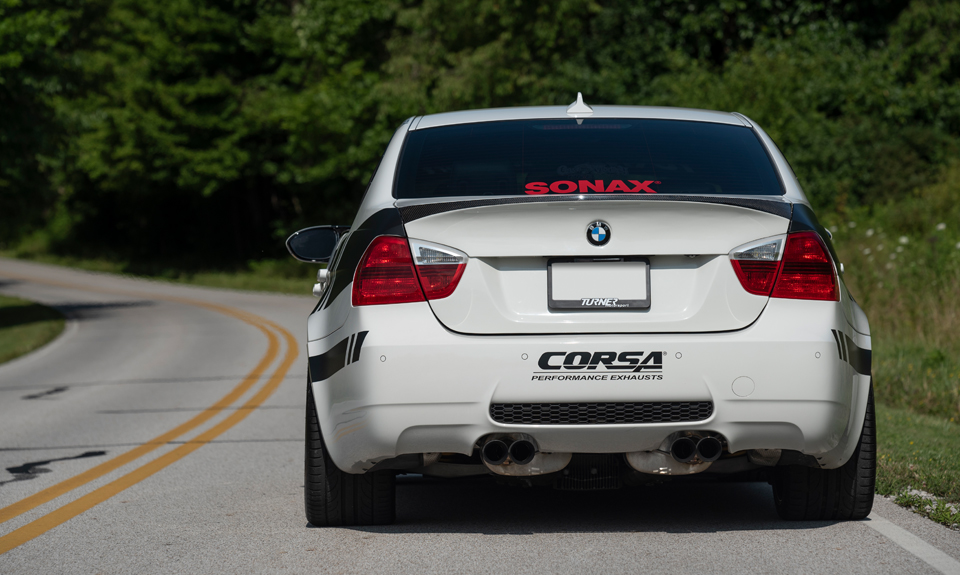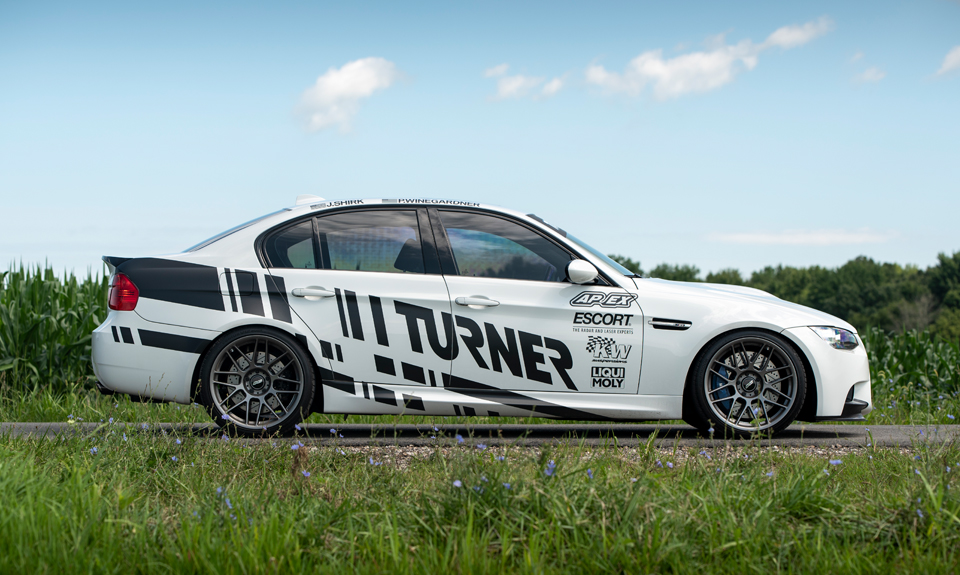
Before we continue forward, you may be curious as to what drove BMW to choose the 8,400 RPM redline V8 over the traditional inline engines of past M cars. Enthusiasts and M3 history buffs may remember the V8 powered E46 M3 GTR that saw limited sales numbers in the early 2000’s. The development of this engine and its placement in the usually straight-six powered M3 happened as a result of BMW’s inability to pull more power from a naturally aspirated six-cylinder inline engine without opting to use forced induction as a means of increasing performance. In the GT3 class, several competitors argued that the V8 BMW used in their racing cars was not a production model and so BMW was forced to produce the famed M3 GTR. From there, when it came time to power the new E9X platform, BMW used the same logic to adding performance by adding cylinders rather than a means of forced induction. In this case, actually, BMW recently revealed in so many words that they chose to remove cylinders from their S85 V10 and developed the new S65 V8 from the extant engine. So while some may feel the V8 is out of place, it can be argued that it is perfectly at home in the extremely competent E9X M3 as a nod to the GT3 class heritage and its most powerful E46 predecessor.
Now that we have established some history, we can move on to selecting an E9X of your own. Since the E9X M3 is a relatively modern car and are ten years old at the most, many of the concerns you would have looking at an older M3 are not applicable. Additionally, the M3 uses an iDrive system to control nearly every aspect of the car. While it may be slightly unintuitive, it does provide information like maintenance history, oil level (there is no physical dipstick,) and allows you to adjust settings like the Dynamic Stability Control all from the same system. Once you become used to using the system, however, it is something that does not take away from the experiences these cars have to offer. Before you pick one to take on a test drive, though, you do need to know several key differences between the years and body styles to make the right decision for your situation.
As we mentioned, there are three body styles. First, the E92 coupe was introduced in 2008. The E90 sedan and E93 convertible followed shortly after. Throughout the lifespan of the E9X platform, they remained nearly unchanged visually and mechanically except some minor adjustments. The minor adjustments, however, can greatly impact your decision to purchase one model over the other depending on your needs and wants. Since these cars are fairly mechanically reliable and modern, many of the pointers will be related to trim packages and model years on which to focus your search.
While all the E9X model years look almost homologous throughout the lineup, the slight differences between them are noteworthy. All did come with either the DCT (Dual Clutch Transmission) that was greatly improved over the previous generation SMG trans or with the six-speed manual option, which we have to say is the preferred choice. If you are looking for an excellent daily driver, the manual transmission is smooth, easy to operate, and provides immense joy when you take advantage of the high-revving S65’s 414hp. The DCT is faster around a track, is comfortable in traffic, and offers lightning shifts, but we do believe it removes some of the connection between car and driver that has always been present in M cars equipped with the standard transmission.
The earliest model years are, in our opinion, the ones to avoid. The 2008 models suffered from a higher-than-usual engine failure rate due to poor lubrication to the connecting rod bearings. This is a similar fault carried over from the S54 but had a different root cause. It is important in your search for a used M3 that you obtain the service records in the car and only consider cars that have had all services completed at the proper intervals, or before, and have undergone all recalls. We advise you avoid a 2008 model year unless you are strictly on a budget and ready to possibly overhaul the engine should it have had a rough life.
The later years worked out the kinks of the new V8 and did not have nearly the same failure statistics as the 2008 model. Although it is important to thoroughly inspect the interior, exterior, and mechanical history of every car you test drive, the later models are marginally more sorted. Additionally, the later years include more of the convenience equipment and a wider range of options that are more expected of a newer luxury sports car in the price range of the E9X M3s. Since you are considering a late-model car like the E9X, it is going to be more worth your while to look at a 2010 and newer model since they will have more equipment like the iPod integration, better HD displays, ditch the disc-based navigation system for one that updates wirelessly, and the arguably more attractive LED LCI tail lights. The later model cars will offer more to make daily driving the car something that requires no sacrifices and will have a higher resale value should you decide to ever trade it in the future.
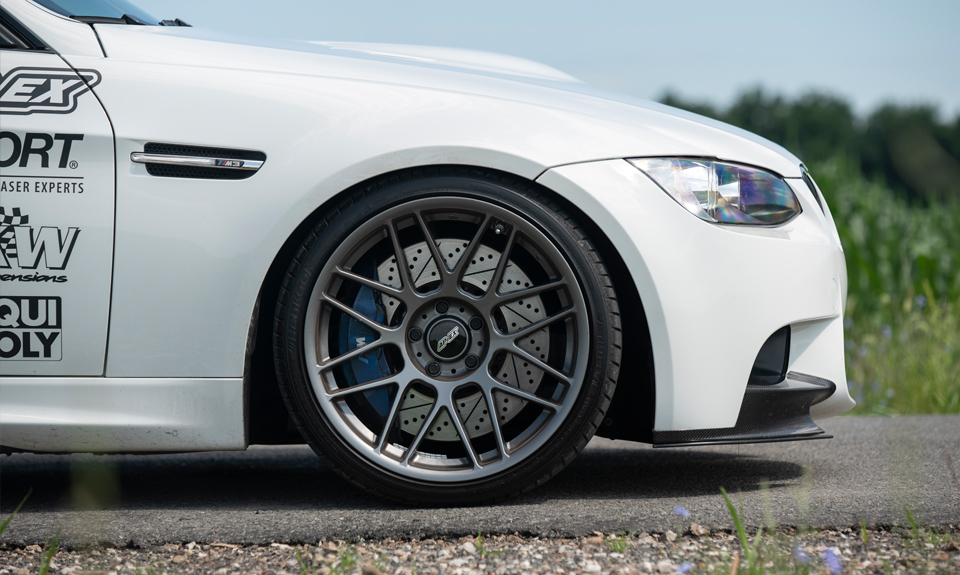
With any used car, especially a performance-oriented model like the E9X M3, it is important to inspect your desired potential purchase. In the case of newer cars, there are so many systems that are unseen to a buyer with basic tools unless you want to spend the entire day taking the car apart and checking visually for wear. We ordinarily would tell you to bring a jack, some tools, and check every wearable component on an older car. The E9X generation, however, is best handled by a BMW dealership or your preferred BMW mechanic. In the interest of time and for your peace of mind, have a Pre Purchase Inspection performed on the car. You should have them conduct an oil analysis there, as well, to ensure there is not excessive wear on the con rod bearings. The technician will provide a breakdown of any service the car needs or will need soon, and is more likely to spot any issues like damage, resprays, or low-quality aftermarket replacement parts if the owner skimped out on a service. The low cost of a PPI is well worth it if you can take that information back to the owner of the car or could tell you that you may want to walk away from that particular example.
If you don’t already have one, a Schwaben Professional BMW Scan Tool will help you diagnose any issues in the car, check any engine faults, and will help you stay on top of maintenance with the car. While it isn’t necessary for you to have for the initial inspection, it can be a powerful bargaining chip if you are going the budget route and have found an M3 with a check engine light on. We do prefer, however, that the car is in pristine shape since maintenance and common problems with the E9Xs definitely get pricey. That isn’t to say, though, that the M3 is problem free entirely. There are a few noteworthy faults that should be considered.
Here are some common faults to be aware of and to look specifically in the service history to see if any have been addressed:
Throttle actuators Clutch (2008 needs an update) Oil analysis Rod bearing fix
These common issues are most prevalent in the 2008 model year cars, but still, need to be considered in later production M3s.
Lastly, the M3 you choose should reflect your needs and wants. If you want the most basic car that offers performance and convenience, a 2009 E90 sedan is your best bet. If you do not need the extra doors, want a bit more convenience features, and updated LCI looks, the 2010 and up E92 coupe is your choice. While the convertible does offer fun without a roof, it is by far the heaviest and least-performance oriented model. Unless you absolutely have to have a convertible, the E93 from any year is our least favorite. Lastly, unless you are confident in your abilities and ready to possibly shell out plenty of cash, we say to look exclusively at 2009 model years and newer. Below we have listed the basic differences between each year for you to consider:
Here is the breakdown of the E9X platforms:
2008: First year of production. Introduces E92 first, then E90 and E93.
2009: E90 receives LCI tail lights, iDrive receives HD based CIC navigation and HD display.
2010: E92 and E93 fitted with LCI tail lights, HD radio becomes standard equipment
2011: ZCP package introduced (wheels, suspension, revised settings for sport mode).
2011.5: Automatic engine start/stop, Bluetooth, iPod integration, M Drive button is standard, standard manually adjusting seats for E90 and E92, Convenience Package replaces Tech Package.
2012: New color options, standard anti-theft alarm systems in the E92 and E93, iPod/USB adaptor, and BMW assist.
2013: No changes, final year of production.
The E9X generation of M3 is arguably the most M3 of all the years thanks to its extreme performance, superior standard of build quality, and incredibly luxurious interior. The convenience offered by the technology and convenience packages in these cars make them truly a modern sports car with which you can live and use every day as a car that checks every box and then some. The E9X has a massive community of support in manufacturers and hobbyists that partner with us to bring an extensive catalog of parts to owners, so you will never be short of performance modifications should you want to have a little more fun in your new E9X M3. The M3 can be your perfect car for everything and during your ownership, we can provide everything you need to keep it pristine or improve the performance to your needs with a multitude of high-quality aftermarket parts dedicated to taking accentuating the E9X M3’s considerable advantages.